How often should my chimney be cleaned?
+
Inspect once a year, clean whenever there is buildup. NFPA Standard 211 says chimneys, fireplaces, and vents “shall be inspected at least once a year for soundness, freedom from deposits, and correct clearances.” If you burn wood regularly, plan on a sweep each year, and sooner if creosote is reaching about an eighth of an inch. Gas fireplaces still need the yearly look, because vents, liners, and components get blockage, corrosion, and nesting. This matters even if you rarely use the chimney, because animals build nests in the flue and other kinds of deterioration can make it unsafe. And if birds or animals have been in there, have it inspected and cleaned once they are gone.
What is included with a chimney cleaning?
+
Clean tarps, a sweep of the flue, a HEPA (high-efficiency particulate air) vacuum so ash stays out of the house, and any recommendations from observations during the sweep. MJL Services explains what it finds and does not invent extras.
What is a chimney crown?
+
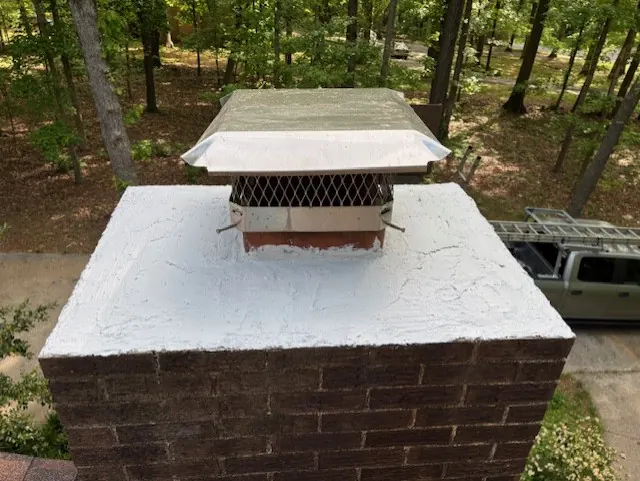
The crown is the concrete or masonry slab on top of the chimney, covering the area around the flue openings. Its job is to shed rainwater away from the structure, keep water out of the brick and mortar, and stop the freeze-thaw cracking that happens when moisture expands inside a crack. A properly built crown has a slight slope, an overhang, and a drip edge so water runs off instead of soaking in. It is not the same thing as a cap. The cap is the metal cover over the flue that keeps out rain, animals, and debris.
What is creosote?
+
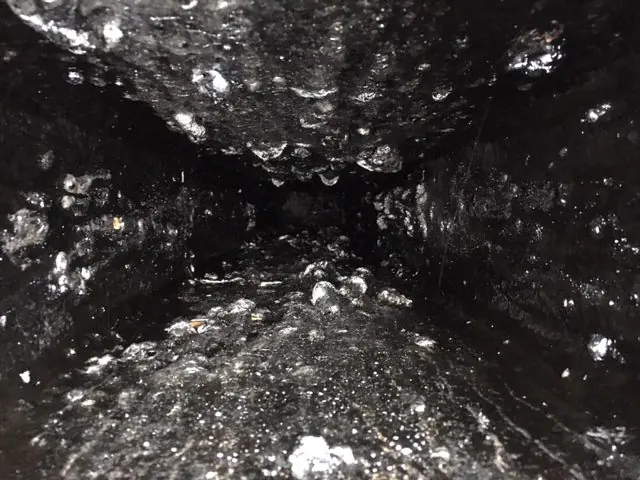
Creosote is the dark, sticky, highly flammable residue that forms inside a chimney or flue when wood, coal, or other fuels do not burn completely. Smoke rises, cools, and the unburned particles and gases condense on the chimney walls. It starts sooty and powdery, turns sticky and tar-like, and can end up hard, shiny, and glazed. It restricts airflow and it is a major chimney fire hazard. Regular inspection and cleaning is what keeps it from getting there, especially if the fireplace or wood stove gets used often.
How do I prevent creosote in my chimney or stove pipes?
+
Less smoke means less creosote. Burn seasoned firewood that has been split and stored six to twelve months, and skip the smoldering low-temperature fires in favor of a hotter, cleaner burn when it is safe to do so. Keep the damper fully open while burning. Never burn trash, cardboard, treated wood, or painted wood. If you run a wood stove, do not close the air controls down so far that the fire goes smoky. Have the flue inspected on a schedule, so buildup gets caught before it turns into a hazard. And a chimney that is not properly sized or is not drafting well will make smoke linger and condense inside the flue, which is worth having looked at.
What type of wood should I burn in my fireplace or wood stove?
+
Dry, seasoned hardwood. Oak burns long and hot, hickory is very hot and dense, and maple, ash, beech, and cherry all burn well. Stay away from green or wet wood, which makes excess smoke and creosote, and do not run softwoods like pine as your main fuel. Never burn painted, stained, pressure-treated, or glued wood, or trash and paper-heavy fires. Split it, stack it off the ground, cover the top, and give it six to twelve months. You want moisture content around twenty percent or less.
How do I properly season firewood?
+
The goal is to get the moisture out so the wood burns hotter and cleaner and makes less smoke. Split the logs soon after cutting, because split wood dries much faster than whole rounds. Stack it off the ground on pallets, rails, or a rack so moisture does not soak up from the soil. Stack loosely enough that air moves through it. Cover the top only, with a tarp or metal roofing, and leave the sides open so moisture can escape. Put it somewhere sunny and breezy rather than damp and shaded. Most firewood needs six to twelve months, and dense hardwood like oak can want twelve to twenty-four. You will know it is ready by the darkened cracked ends, the lighter weight, the loose bark, and the hollow sound when two pieces knock together. A moisture meter is the easiest way to be sure.
I have chimney swifts in my chimney. How do I get them out?
+
You wait, and that is the honest answer. Chimney swifts are protected migratory birds, so while they are nesting you should not try to remove them, trap them, smoke them out, or otherwise disturb them. They typically nest in spring and summer and migrate out by late summer or early fall. Do not run the fireplace or stove while they are in there, because the smoke and heat are a hazard to them and to you. Once they have gone, have the chimney inspected and cleaned, since nesting material and droppings block airflow and create fire and smoke problems, and then have a properly fitted cap or screen installed that keeps them out while still allowing safe venting. If a bird gets trapped inside the house or the chimney, contact a licensed wildlife rehabilitator or animal control rather than handling it yourself. The North Carolina Wildlife Resources Commission can also point you to local help.